Together, we solve the challenges of tomorrow.
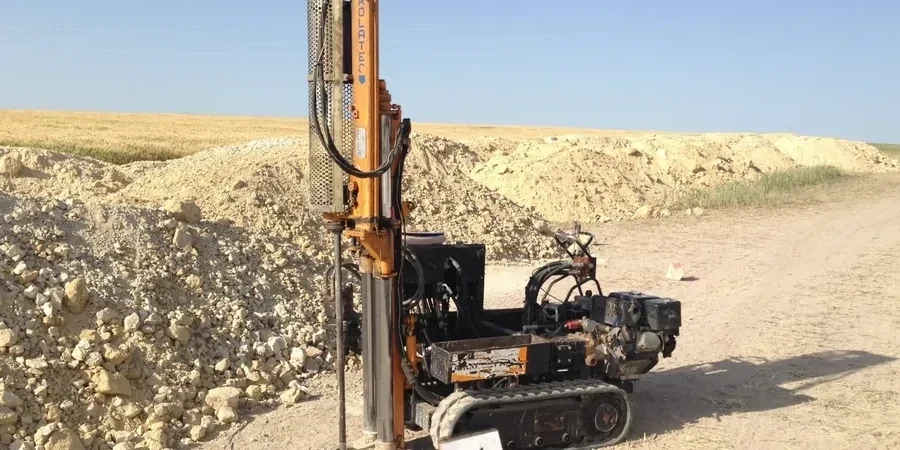
SEE MORE →In-situ testing forms the cornerstone of geotechnical site investigation across Southend-on-Sea, encompassing a suite of field-based techniques that evaluate ground conditions without removing soil samples from their natural state. This category covers direct assessment methods including density measurements, strength profiling, permeability checks, and deformation monitoring—all performed on location to capture the true behaviour of the ground under existing stresses. For a coastal town built on complex estuarine deposits, the value of in-situ data cannot be overstated: it reveals how soils and weak rocks will actually perform when loaded by foundations, excavated for basements, or subjected to tidal groundwater fluctuations.
Southend-on-Sea sits atop a geological sequence dominated by the London Clay Formation, overlain in many areas by Pleistocene river terrace gravels and recent alluvium along the Thames Estuary foreshore. The London Clay is a stiff, overconsolidated deposit that can present shrink-swell hazards, while the superficial gravels and soft silts vary dramatically in bearing capacity and drainage characteristics over short distances. In-situ testing cuts through this variability by measuring properties like density and shear strength directly at the depth of interest. A classic example is the field density test (sand cone method), which verifies compaction levels in granular fills and terrace gravels—critical where development platforms are being raised above flood levels.
Compliance with British Standards governs every in-situ investigation undertaken locally. BS EN ISO 22476 series specifies requirements for cone penetration testing, pressuremeter work, and dynamic probing, while BS 1377 remains the definitive reference for density assessments including the sand replacement procedure. For brownfield regeneration sites—of which Southend has many, from former industrial yards to ex-MOD land—BS 10175 provides the framework for combining in-situ results with laboratory analysis to characterise contamination risks. All testing must align with the UK Specification for Ground Investigation, second edition, ensuring methodologies are appropriate for the intended design purpose, whether that be shallow pad footings or deep piled solutions.
The range of projects demanding in-situ testing across Southend-on-Sea is broad. Residential developments on the town's sloping clay sites require strength profiling to assess slope stability and foundation options. Infrastructure schemes along the A127 corridor and the pier conservation works rely on density and stiffness measurements to underpin structural decisions. Flood defence upgrades along the estuary edge depend on permeability data gathered through field tests to design dewatering and drainage systems. Even smaller-scale works—house extensions, retaining wall construction, sustainable drainage installations—benefit from targeted in-situ assessments that reduce uncertainty and manage geotechnical risk.
In-situ testing evaluates soil or rock properties directly in the ground without removing samples, preserving natural stress states, moisture conditions, and fabric. Laboratory testing, by contrast, analyses disturbed or undisturbed samples extracted from boreholes. In-situ methods often carry out continuous profiles and faster results, making them ideal for detecting layering and assessing ground behaviour under field conditions.
Southend-on-Sea's geology features London Clay prone to shrink-swell behaviour and variable alluvial deposits along the Thames Estuary. In-situ testing captures how these materials perform under natural loading and tidal groundwater influences, revealing strength, density, and permeability variations that laboratory tests on small samples might miss. This local understanding is essential for safe foundation design.
Key standards include BS EN ISO 22476 for cone penetration and pressuremeter tests, BS 1377 for density and compaction assessments, and BS 10175 for investigation of potentially contaminated sites. The UK Specification for Ground Investigation provides overarching guidance on method selection and reporting, ensuring all field tests meet recognised quality benchmarks.
In-situ testing supports a wide range of projects: residential and commercial building foundations, highway and infrastructure schemes, flood defence works, retaining structures, and brownfield redevelopments. Any project where ground conditions affect stability, settlement, or drainage can benefit—from major coastal defences to domestic extensions on sloping clay sites.
We serve projects across Southend-on-Sea and surrounding areas.