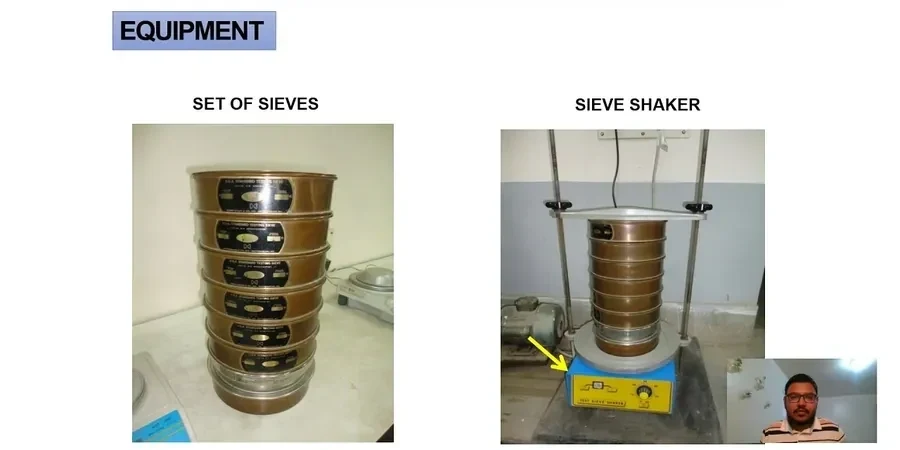
The ground beneath a seafront development on Thorpe Esplanade behaves completely differently from the clay-heavy soils found near Priory Park. Southend-on-Sea sits on a complex mix of London Clay, river terrace gravels from the Thames-Medway system, and pockets of wind-blown brickearth that can throw unexpected grading curves into a design. Contractors learn quickly that a basic sieve-only check tells less than half the story. Our grain size analysis (sieve + hydrometer) provides the full particle size distribution from coarse gravel down to the sub-2-micron clay fraction, which is exactly what BS 5930 and BS EN ISO 17892-4 demand when classifying soils for foundation design in this part of the Essex coast. Before committing to a bearing capacity model, many engineers combine this dataset with CPT testing to correlate continuous stratigraphy with laboratory-measured fines content, especially where thin silt seams control drainage behaviour.
A sieve-only curve is a half-done job — the hydrometer fraction tells you whether your fill will drain or hold water for weeks.
Local context
A recurring mistake among earthworks contractors in Southend is assuming the brickearth lenses across the northern wards will compact like a clean sand. They do not. Without a full hydrometer reading, the silt fraction remains invisible on a standard sieve report, and a fill that looks workable in dry weather turns into a pumping, unworkable mess after a week of Essex rain. The grading curve directly feeds into drainage design, frost susceptibility assessment, and even the choice of compaction plant. When the fines content exceeds 15 percent, the material requires a completely different specification for Proctor testing to establish an achievable density target. With our UKAS-accredited laboratory on the same data system as the site team, results arrive fast enough to keep the earthworks programme moving and avoid standing time on plant.
Quick answers
What is the cost of a combined sieve and hydrometer test in Southend-on-Sea?
A full combined particle size distribution including sieve and hydrometer phases typically ranges from £80 to £140 per sample, depending on the number of sieves required and whether the sample needs pre-treatment for organic content or calcium carbonate. Bulk rates apply for five or more samples from the same site.
How long does a hydrometer analysis take from sample receipt?
The sedimentation phase alone runs for a minimum of 24 hours under BS 1377-2. Including the initial sieve stack, oven drying, dispersant preparation, and final data reduction, we normally report a combined sieve-plus-hydrometer result within three working days of sample arrival at the Southend lab.
Does the brickearth in Southend require hydrometer testing?
Almost always. The local brickearth is a silty clay with a fines fraction that can swing from 30 to 80 percent across a single site. A sieve-only curve masks that variability, so hydrometer data is essential before classifying the material as fill, assessing its frost susceptibility, or designing subsoil drainage for foundations in areas like Westcliff and Leigh-on-Sea.
Can you match the grading curve to a specific SHW or BRE specification?
Yes. We overlay your grading curve onto the relevant grading envelopes — typically Series 600 or 800 of the Specification for Highway Works, or BRE Digest 363 for sulphate-resistant fill — and highlight any bands that sit outside the target envelope. This makes the compliance submission to the adopting authority straightforward.