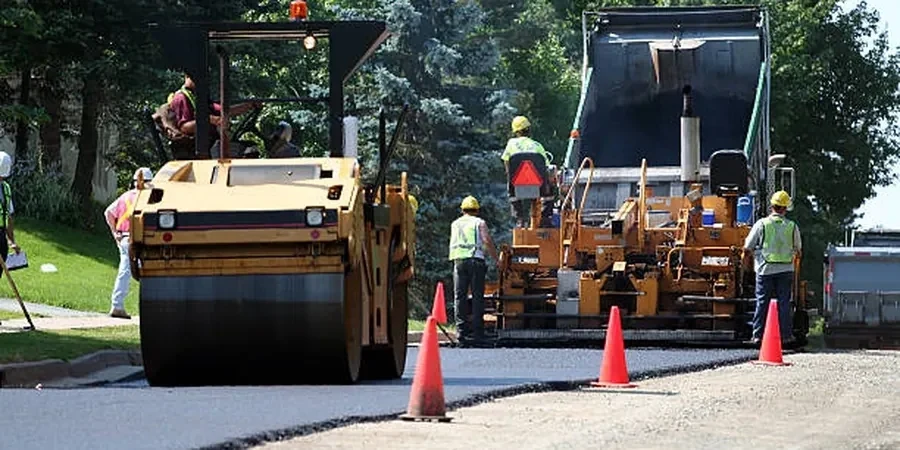
Around Southend-on-Sea, we often see pavement failures that start with seemingly minor cracking, only to reveal deeper issues in the subgrade within two seasons. The town sits on a geological transition between London Clay and the sand and gravel deposits of the Thames Estuary terraces, and that mix creates a highly variable bearing platform. A flexible pavement design here cannot rely on standard catalogue solutions alone. We routinely pair material characterisation from grain-size analysis with CBR profiling to tailor the granular layer thickness to what the ground actually offers, rather than what the desk study assumes. This approach has saved several coastal car parks and access roads from premature rutting and expensive reconstruction down the line.
In Southend-on-Sea's estuarine setting, the subgrade moisture regime can halve the effective CBR between August and February if drainage is not designed for the tidal groundwater influence.
Quick answers
How much does flexible pavement design cost for a typical access road in Southend-on-Sea?
For a project such as a car park or residential access road in the Southend area, the combined investigation, design, and reporting work usually falls between £1,390 and £4,580, depending on the number of trial pits, the linear metres of pavement, and whether laboratory soaked CBR testing is needed for clay subgrades.
Why does a flexible pavement sometimes need a geogrid in Southend-on-Sea?
Geogrid reinforcement becomes necessary when the subgrade CBR is below 2% or when historical mapping indicates variable fill thickness beneath the formation. In Southend, where brickearth pits and backfilled channels are common, the geogrid bridges soft spots and distributes traffic loads, preventing the localised depressions that would otherwise appear within the first few winters.
What is the typical pavement structure for a residential road on London Clay in this area?
On a London Clay subgrade with a design CBR around 2–3%, a typical residential road in Southend-on-Sea would use 150 mm of capping layer, 225 mm of Type 1 sub-base, a 60 mm AC 20 binder course, and a 40 mm AC 10 surface course. We adjust these thicknesses based on the specific traffic category and the groundwater conditions measured at the time of investigation.