← Home · Investigation

SPT Testing in Southend-on-Sea: BS 5930 Compliant Ground Investigation

Together, we solve the challenges of tomorrow.

SEE MORE →

Southend-on-Sea sits on a complex stratigraphy dominated by the London Clay Formation, overlain in many areas by sands and gravels of the Thames Group and pockets of soft alluvium near the seafront. This mix creates highly variable bearing conditions across the borough. A single site can transition from dense gravel to stiff clay within a few metres, which is exactly why we run the Standard Penetration Test here. The SPT gives us N-values that correlate directly with relative density and undrained shear strength, feeding into foundation design per BS EN 1997-2. We mobilise cable percussion rigs across Southend-on-Sea, from Leigh-on-Sea to Shoeburyness, and recover disturbed samples at 1.5 m intervals—or more frequently when the ground changes fast.
On coastal sites where sand layers dominate, we often combine the SPT with a CPT programme to get a continuous profile of tip resistance and sleeve friction without gaps between the discrete SPT blows.

In Southend-on-Sea, the difference between a 5 m and a 15 m pile often hinges on three SPT blows in a thin clay seam.

Process overview

The estuarine climate of Southend-on-Sea—with high humidity, seasonal water table fluctuations, and occasional tidal influence up the Roach and Thames corridors—accelerates weathering in the upper strata. That means near-surface SPT refusal depths can be misleading if you do not log the moisture condition and lithology at every spoon change. Our team records blow counts for each 75 mm penetration increment (BS 5930:2015+A1:2020, clause 7.3), splitting the standard 300 mm drive into three 150 mm seating and test phases so we catch soft pockets that might otherwise be averaged out. We also cross-reference N60 values with the Atterberg limits of cohesive samples to flag potentially desiccated crusts that inflate shallow bearing estimates. In the chalk subcrop beneath parts of Southchurch, SPT refusal can occur above the weathered zone; here we augment the data with rotary coring to confirm rock quality designation before finalising pile lengths.
SPT Testing in Southend-on-Sea: BS 5930 Compliant Ground Investigation
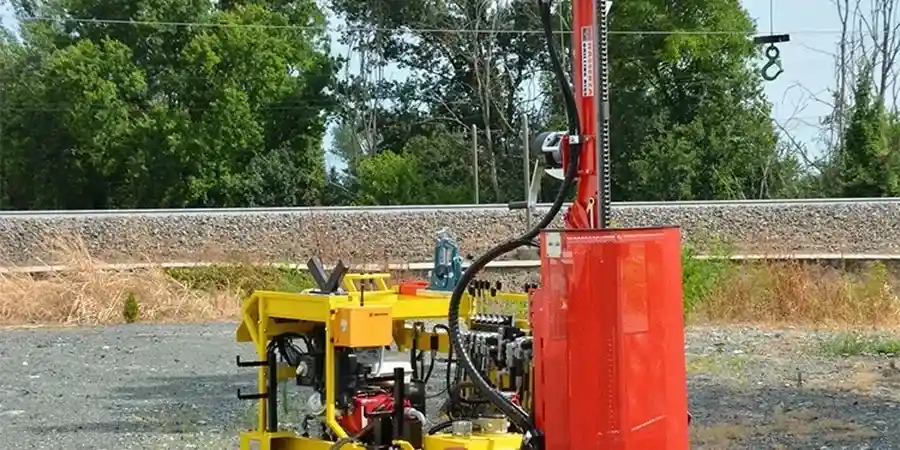
Technical reference image — Southend-on-Sea

Local context

Southend-on-Sea’s cliff gardens and seafront slopes—cut into London Clay and overlain by made ground—have a history of shallow instability after prolonged wet winters. Ignoring low SPT N-values in the upper 3–4 m here can miss a softened clay layer that governs slope factor of safety. The pier and surrounding leisure developments sit on variable fill over alluvium; SPT refusal depths in these zones can swing from 2 m to 18 m across a single building footprint. We have seen sites where undetected buried channels filled with organic silt produced N-values of 1–2, requiring Improvement before even a raft foundation was viable. Underestimating the variability means redesign during construction, extended programmes, and cost overruns that could have been avoided with a denser SPT grid from the start.

Need a geotechnical assessment?

Reply within 24h.

Email: contact@geotechnical-engineering1.com

Technical parameters


ParameterTypical value
StandardBS 5930:2015+A1:2020 + BS EN ISO 22476-3
Drive interval300 mm (seating 150 mm + test 300 mm)
Hammer typeAutomatic trip hammer, energy ratio calibrated
Borehole diameter150–200 mm (cable percussion)
SamplerStandard split spoon (BS split barrel)
ReportingN-value, N60, soil description to BS 5930
Depth capabilityUp to 40 m bgl, refusal in dense gravel/chalk
Sample recoveryLogged per run, disturbed sample bagged

Additional services

01

CPT Cone Penetration Testing

Push a 15 cm² cone continuously through the ground and record tip resistance, sleeve friction, and pore pressure every 10 mm. In Southend-on-Sea, CPT works well where sands and silts dominate—particularly near the seafront and along the Thames corridor—giving you a high-resolution profile that fills the gaps between SPT blow counts.

02

Atterberg Limits and Classification

Determine the liquid limit, plastic limit, and plasticity index of cohesive soils recovered from the split spoon. This lab suite (BS 1377-2) converts field descriptions into index parameters that feed directly into bearing capacity and settlement calculations for foundations on London Clay.

Reference standards

BS 5930:2015+A1:2020 – Code of practice for ground investigations, BS EN ISO 22476-3 – SPT and dynamic probing, Eurocode 7 – BS EN 1997-1:2004 + UK National Annex, BS EN ISO 14688 – Soil classification for engineering purposes

Common questions

How much does an SPT investigation cost in Southend-on-Sea?

For a typical domestic or small commercial site, an SPT investigation with 3–4 boreholes to 10–15 m depth generally falls between £410 and £580 per borehole, including mobilisation, sampling, logging, and a factual report. Larger multi-rig programmes on variable ground naturally move toward the upper end of that range. We provide a fixed quote after reviewing the site location and access constraints.

What is the difference between SPT N-value and N60?

The raw SPT N-value is the blow count recorded in the field with whatever hammer and rod configuration is on the rig. N60 is the blow count corrected to 60% of the theoretical free-fall energy (ERi) of the standard hammer. BS EN ISO 22476-3 requires that we report both, because energy efficiency varies between rigs—especially older cable percussion setups. Without the N60 correction, you can easily overestimate or underestimate relative density by 20-30%.

How deep do you typically drill for an SPT in Southend-on-Sea?

Most residential and low-rise commercial investigations stop between 10 m and 20 m bgl, depending on the founding stratum. Where we hit dense gravel or chalk refusal above that depth, we terminate the borehole and log the refusal condition per BS 5930. For piled schemes, we extend the investigation to at least 5 m below the anticipated pile toe, which in parts of Southend-on-Sea can push depths past 30 m.

Can you carry out SPT work inside existing buildings?

Yes, we operate restricted-access rigs and windowless sampling equipment that fit through standard doorways and under low headroom. This is common for basement conversions and underpinning assessments in the conservation areas around Clifftown and Leigh Old Town. The SPT procedure remains identical; the rig is simply scaled down and we compensate by increasing the frequency of sampling where access limits borehole depth.
Location and service area

We serve projects across Southend-on-Sea and its metropolitan area.

View larger map