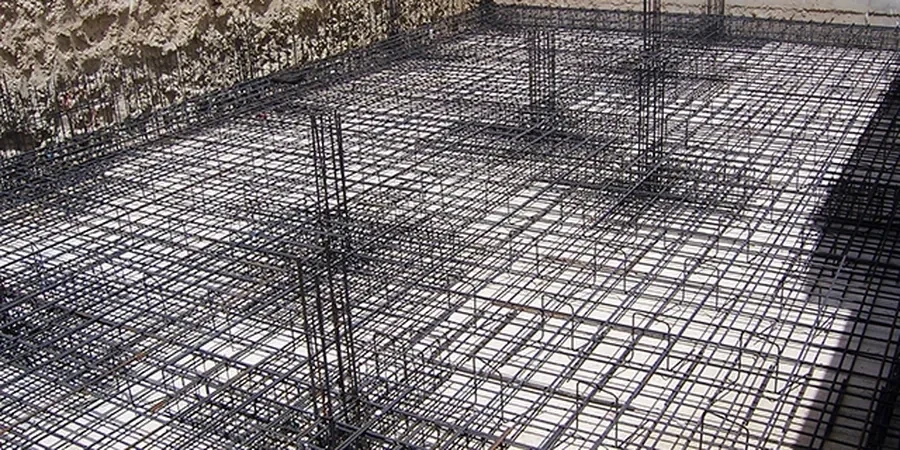
Most builders working along the Thames Estuary quickly learn that the ground beneath Southend-on-Sea rarely cooperates. The town sits on a complex sequence of London Clay, silty alluvium, and pockets of loose sand and gravel deposited by ancient river channels—material that consolidates unevenly under load and reacts badly to the area's notoriously high groundwater table. A conventional strip footing often becomes uneconomic or simply unworkable at depths where the bearing stratum is too deep to reach. Raft and mat foundation design solves this by spreading structural loads across a wide, continuous slab, reducing differential settlement to tolerable limits and bypassing the need for deep excavation. The engineering team applies Eurocode 7 (BS EN 1997-1:2004) geotechnical design principles alongside BS 5930 site investigation standards to model soil-structure interaction with precision, factoring in Southend-on-Sea's specific tidal groundwater fluctuations that can vary by over a metre between high and low tide. Before finalising the raft geometry, it is common practice to correlate soil stiffness profiles from a seismic refraction survey with borehole data to map the depth to competent London Clay across the site.
In Southend-on-Sea's alluvial ground, a properly designed raft foundation reduces differential settlement to below 25 mm, meeting the serviceability limits required by BS EN 1997 for masonry and framed structures alike.
Process overview
Southend-on-Sea experiences a maritime climate with persistent moisture and seasonal wetting-drying cycles that affect the upper metre of clay subgrade more aggressively than inland sites. This surface heave potential, combined with the town's flat topography and poor natural drainage in districts like Shoeburyness and Thorpe Bay, demands a raft design that accounts for both bearing capacity and long-term serviceability under cyclic moisture conditions. The technical approach begins with a detailed ground investigation that quantifies undrained shear strength and consolidation parameters at multiple depths, because a raft in Southend-on-Sea must often bridge soft lenses of alluvium that would cause isolated footings to tilt. The design process evaluates rigid versus flexible raft behaviour using Winkler spring models and finite element analysis, selecting reinforcement layouts and slab thicknesses that keep angular distortion below 1/500 for brickwork structures. Edge thickening, beam-strip reinforcement, and strategic construction joints are detailed to handle the high edge moments that develop when a stiff raft spans over compressible soil. For larger commercial projects near the seafront, the team integrates Improvement techniques such as vibro-stone columns beneath the raft footprint to homogenise the bearing stratum and accelerate consolidation, reducing post-construction settlement that could otherwise compromise the structure within the first five years of service.
Local context
Eurocode 7 requires that geotechnical designs for Category 2 and 3 structures explicitly address both ultimate limit state (ULS) and serviceability limit state (SLS) through a risk-based approach, and in Southend-on-Sea this has direct consequences for raft foundations. The primary risk vector is differential settlement driven by lateral variability in the alluvial deposits: a raft that performs acceptably over uniform London Clay can undergo unacceptable distortion where a buried channel of soft silt crosses the footprint. Undetected peat lenses—common in the estuarine deposits east of the pier—introduce a secondary risk of long-term creep settlement that continues for decades after construction. The design team mitigates these risks through parametric settlement analysis across multiple soil profiles, factoring in the sensitivity of the superstructure to angular distortion. Where the factor of safety against bearing failure drops below 2.0 under undrained conditions, Improvement or a cellular raft configuration with deeper downstand beams is specified. The design also incorporates buoyancy checks for sites within 200 metres of the tidal foreshore, because a rising water table can reduce effective bearing pressure and, in basement rafts, produce uplift forces that exceed the dead weight of the slab if not properly counterbalanced with tension piles or increased slab mass.
Common questions
How much does a raft foundation design cost for a project in Southend-on-Sea?
The fee for a raft/mat foundation design package in Southend-on-Sea typically ranges from £710 to £2,870, depending on the structure size, the complexity of the ground profile, and whether Improvement coordination is included. A straightforward residential raft on competent London Clay sits at the lower end, while a large commercial raft requiring finite element analysis and buoyancy checks near the seafront falls at the higher end. Every quotation includes the interpretative ground model, ULS/SLS calculations, and construction-ready reinforcement detailing.
When is a raft foundation preferable to strip footings in Southend-on-Sea?
A raft becomes the more viable option when the competent bearing stratum—typically London Clay with an undrained shear strength above 75 kPa—lies deeper than about 1.5 metres, or when the near-surface alluvium is so variable that isolated footings would experience unacceptable differential settlement. Rafts also make economic sense where the groundwater table is high and deep excavations for strip footings would require extensive dewatering, which is a common scenario across much of Southend-on-Sea.
What site investigation data is needed before designing a raft foundation?
The minimum dataset includes borehole logs with SPT N-values and undisturbed samples at the raft bearing level and at least 1.5 times the raft width below it, laboratory classification and strength tests (Atterberg limits, undrained triaxial, oedometer consolidation), and groundwater monitoring over at least one tidal cycle. For larger rafts in Southend-on-Sea, CPT soundings and geophysical surveys such as MASW or seismic refraction are strongly recommended to map lateral variability in soil stiffness across the footprint.
How do you address the high water table near Southend-on-Sea's seafront in the design?
The design incorporates buoyancy calculations comparing the submerged weight of the raft and superstructure against the hydrostatic uplift force at maximum recorded groundwater level, applying the partial factors from BS EN 1997. If the factor of safety against flotation is below 1.1, the team specifies additional dead load through increased slab thickness, tension piles anchored into the London Clay, or a drained sub-slab void with a sump and pump system to relieve water pressure. Waterproofing to BS 8102 Grade 2 or 3 is detailed for habitable spaces below ground.
Can a raft foundation be designed for a site with soft alluvial soils in Southend-on-Sea?
Yes, and this is exactly the condition where rafts excel. The design models the soft alluvium as a compressible layer and calculates the expected total and differential settlement over the design life of the structure—typically 50 years. If the predicted settlement exceeds serviceability limits, Improvement such as vibro-stone columns or a preloading programme is integrated beneath the raft to stiffen the alluvium and accelerate consolidation before the slab is cast. The approach has been validated on multiple residential and commercial projects across the Thames Estuary region.