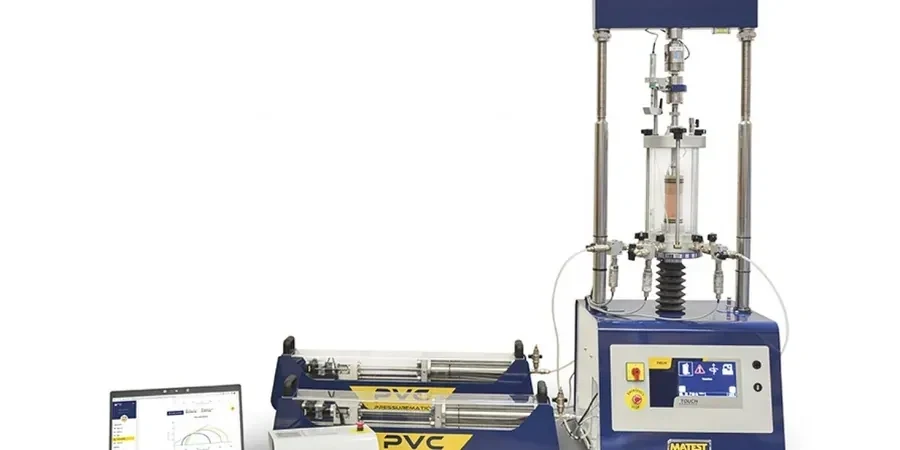
Much of Southend-on-Sea sits on the London Clay Formation, overlain by pockets of alluvium and marine deposits along the Thames Estuary. What we see repeatedly in site investigations here is that the undrained shear strength can shift dramatically within just a few metres of depth. The water table sits high; the tidal influence pushes pore pressures up and down daily. A standard penetration test gives you N-values, but for critical infrastructure near the seafront or on the redeveloped slopes of Prittlewell, you need effective stress parameters. That is where the triaxial test becomes essential. We run consolidated undrained and drained tests to give you c' and φ' values that hold up under Southend-on-Sea's groundwater regime. Before signing off foundation depths for a pier block or a coastal defence, it pays to combine triaxial data with in-situ permeability measurements to model long-term drainage. The geology here does not forgive shortcuts. We have learned that lesson more than once on projects along the Eastern Esplanade.
A well-executed triaxial test on Southend-on-Sea London Clay is the difference between a foundation that settles 10 mm and one that tilts visibly after two winters.
Local context
Southend-on-Sea is not a single ground profile. Move from the chalk outcrop near Leigh-on-Sea eastwards towards Shoeburyness, and you go from stiff clay over chalk to deep alluvial silts and soft clays that were deposited in a tidal creek environment. The difference in effective friction angle between these two zones can be over 10 degrees. If a triaxial test program does not reflect that variability, the foundation design drifts into either overconservative cost or underconservative risk. We have reviewed borehole logs from the Kursaal area where peat lenses at 4 metres depth were missed, and the triaxial samples were all taken from the stiffer clay above. The strength profile looked fine on paper. The settlement later told a different story. In Southend-on-Sea, we insist on sampling every distinct stratum and running triaxial tests on the weakest layer, not the strongest. For embankment projects near the airport, we also recommend running a few slope-stability analyses using the actual triaxial parameters rather than generic correlations.
Quick answers
How much does a triaxial test program cost in Southend-on-Sea?
A full triaxial testing program typically ranges from £1.680 to £2.310 depending on the number of specimens, the type of test (UU, CIU, CID) and whether multistage or stress path testing is required. We carry out a fixed quote after reviewing the borehole logs and determining how many distinct strata need individual strength parameters.
Which triaxial test type is right for London Clay in Southend-on-Sea?
For short-term stability of excavations and foundations, consolidated undrained (CIU) tests with pore pressure measurement are the standard. For long-term drained analysis of embankments and retaining walls, we run consolidated drained (CID) tests. In Southend-on-Sea, where groundwater levels are tidally influenced, we often recommend a combination of both to capture the full range of effective stress conditions.
How many triaxial specimens do you need for a reliable strength envelope?
We recommend a minimum of three specimens per distinct stratum tested at different confining pressures to define a Mohr-Coulomb failure envelope. For heterogeneous ground like the alluvial sequences found east of Southend Pier, we increase that to four or five specimens and include multistage testing where sample recovery is limited.