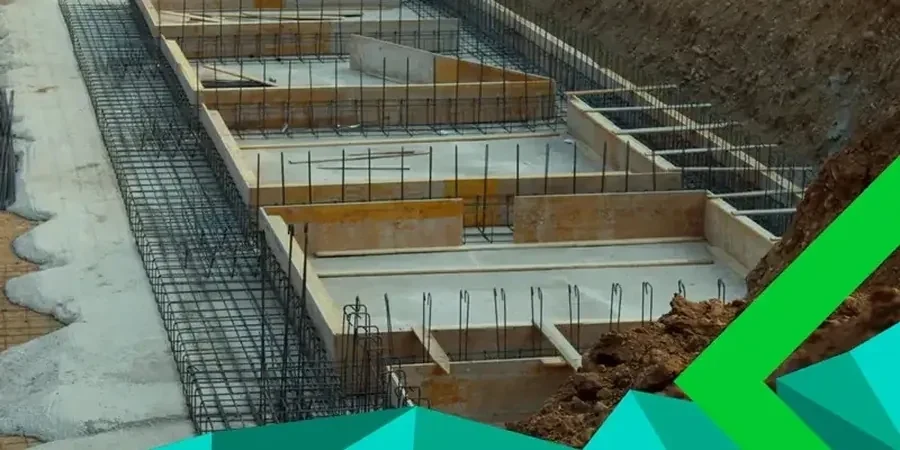
In Southend-on-Sea, many projects start with a tricky surprise: what looks like solid ground from the surface often hides layers of soft alluvium or loose windblown silt just a metre down. We have seen it repeatedly along the coastal strip from Thorpe Bay to Leigh. That is precisely why shallow foundation design here demands more than a textbook approach. The British Geological Survey maps the area as a complex mix of London Clay, Head deposits, and river terrace gravels, meaning two adjacent plots can behave completely differently under load. Before any structural engineer commits to a footing width, we recommend a site-specific ground investigation. Combining trial pits with test pits gives us direct observation of the soil profile, while laboratory grain size analysis confirms the drainage characteristics that influence bearing capacity in this marine-influenced environment.
Two boreholes in Southend can look like two different geological worlds. That is why we calibrate every shallow foundation to the specific ground profile, not a regional assumption.
Local context
Southend sits at just 22 metres above sea level at its highest point, with large areas of the borough barely reaching 5 metres OD. This low-lying position, combined with a tidal estuary that sees a range of over 5 metres, means groundwater is a constant variable in shallow foundation design. We have measured water tables at less than 800 mm below ground level in winter months near the coast. Ignoring this leads to floatation risks during construction and long-term softening of the bearing stratum. Another issue we frequently identify is the presence of undocumented fill. Southend-on-Sea expanded rapidly in the Victorian and Edwardian eras, and many plots contain brick rubble, ash, and organic waste that compact unpredictably. A foundation placed on these materials without proper removal or replacement will expertise differential settlement. The consequence is not just cracked brickwork; it can compromise drainage falls and service connections, multiplying the repair cost far beyond the initial ground investigation saving.
Quick answers
What makes shallow foundation design different in Southend-on-Sea compared to inland Essex?
The main difference is the proximity to the Thames Estuary and the complex Quaternary geology. Southend has extensive alluvial deposits and marine silts that are less common further inland. Groundwater is also significantly higher. Our designs account for buoyancy effects and reduced effective stress that a generic design for drier inland clay might overlook.
Do I always need a deep borehole for a shallow foundation?
Not always, but you need enough investigation depth to prove the bearing stratum. For a typical two-storey extension in Southend-on-Sea, a combination of machine-dug trial pits to 3 metres and a dynamic probe to verify refusal depth is often sufficient. The investigation must go at least 1.5 times the foundation width below the proposed bearing level, as required by BS 5930.
How much does shallow foundation design cost for a residential project in Southend?
For a typical residential scheme in Southend-on-Sea, the fee for the geotechnical design package, including the interpretive report and foundation recommendations, ranges from £1.530 to £2.180, depending on the number of foundation elements and the complexity of the ground conditions.
Can you design foundations on the soft ground near the seafront?
Yes. The seafront area requires careful assessment, and in some cases shallow foundations are feasible with wider reinforced bases or a compacted granular blanket. We check both bearing capacity and long-term settlement. If the alluvium is too thick, we will advise on the transition point where a piled solution becomes more economical, but we always assess the shallow option first.
How do you handle the risk of sulphate attack on concrete in Southend soils?
We specify chemical testing on soil and groundwater samples as part of every investigation. Based on the sulphate and pH results, we assign a Design Sulphate Class following BRE Special Digest 1. This determines the concrete specification and any additional protective measures. In parts of Southend near the estuary, we often encounter Class DS-2 or higher, requiring sulphate-resisting cement.